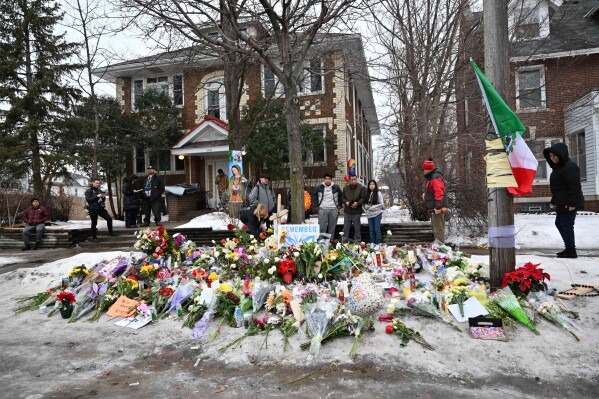
Minneapolis, MN — The fatal shooting of 37-year-old Minnesota mother, Renee Nicole Good, by a U.S. Immigration and Customs Enforcement (ICE) agent on January 7 has sparked outrage, confusion, and—most notably—a national identity crisis among Americans who once believed they were insulated from state violence.
Good, a U.S. citizen and mother of three, was shot and killed in her vehicle after ICE agents approached her car during a federal enforcement operation in a Minneapolis neighborhood. Video footage shows agents attempting to open the door of Good’s vehicle. In response, she drove away from the officers, at which point an ICE agent opened fire, striking and killing her.
Good was not the target of the ICE activity. She had no warrant, no charges, and no known connection to the individuals being sought.
Her death has raised disturbing questions about:
• federal authority
• use of force
• civilian rights during ICE operations
• and whether anyone is truly safe from state violence
“This Shouldn’t Happen Here” — A Shock Mostly Felt by White America For many white Americans, Good’s death represents a shocking rupture between the country they believed existed and the one they are now seeing.
Growing up, many white residents were taught:
• police are protectors,
• law enforcement targets “bad people,”
• mistakes are rare,
• and “innocent people don’t get hurt.”
Good’s killing undermines all four assumptions.
Black Americans Say: “Welcome to Our Reality” Black communities responded differently. To many Black Americans, Good’s death does not represent a new chapter—it is another entry in a long, documented pattern of:
• mistaken identity shootings
• escalated force
• civilian deaths during unclear operations
• and government agencies facing little immediate accountability.
While Good’s death shocked white audiences, Black Americans have pointed to decades of fatal encounters with law enforcement, captured on video and dismissed in public conversation. For them, the Good shooting is not an aberration. It is evidence of what happens when official narratives go unchallenged, and when power operates without public oversight.
It Was Never About Race—It Was About Power
Analysts and historians note that while race shapes outcomes, the deeper dynamic is who does and does not have structural power.
Good’s death highlights three uncomfortable truths:
1. Federal agencies are authorized to use force that is rarely questioned.
2. Citizen status does not guarantee protection during enforcement events.
3. White Americans may no longer remain insulated spectators to state violence.
Historians cite the executions of abolitionist John Brown, the shootings of students at Kent State, and the crushing of white labor protests and strikes in the early 20th century as examples of the state turning aggressive force against white citizens when they fall outside sanctioned lines.
Good’s shooting aligns with that historical arc.
A Turning Point for Public Perception Whether intended or not, Good’s death challenges long-standing beliefs in American policing and federal protection. Key questions now circulating online and in public discourse include:
• Why was lethal force used against a civilian attempting to flee danger?
• Should ICE agents be operating with police-style authority in residential neighborhoods?
• Who is accountable when a citizen is killed during an enforcement action they were not implicated in?
• And most importantly: If a white woman can be shot under these circumstances, who is safe?
ICE and DHS Face Scrutiny
The Department of Homeland Security has called the shooting “under review,” while federal statements have implied that Good’s movement inside her vehicle constituted a threat. However, Minneapolis officials and activists argue that:
• video evidence contradicts federal claims,
• Good appeared to be escaping a frightening encounter, not initiating violence,
• and labeling a panicked mother a “threat” sets a dangerous national precedent.
Civil rights lawyers warn that if this incident is normalized, public safety expectations during federal operations will be permanently altered.
A National Wake-Up Call
Good’s death has already become a flashpoint for discussion across:
• social media
• immigration policy circles
• community safety organizations
• and civil rights advocates of all backgrounds
To Black Americans, this moment is familiar. To white Americans, it may mark the beginning of a painful realization:
State power does not always differentiate.
It protects itself first, and citizens second—if at all.
The Story Isn’t Over
Investigations continue.
Public pressure is building.
And for the first time in a long time, white Americans are asking questions Black Americans have been asking for generations.
What happened to Renee Nicole Good is not just a tragedy.
It is a test of whether the country can finally see what’s been happening— not only to minorities, but now to people who once believed they were untouchable.
Her death won’t be forgotten.
Because now everyone—not just the already targeted—is paying attention.






1 thought on “Minnesota Shooting of White Mother Renee Nicole Good Raises Questions White America Can No Longer Ignore”
Typically law enforcement bs…